

How we ranked the 2026 AVS Leaderboard
Ranking autonomous vehicle companies requires looking beyond marketing claims. Our methodology for the 2026 AVS Leaderboard relies on three hard metrics: safety performance, regulatory standing, and commercial deployment scale. We evaluated the top contenders based on verifiable data rather than projected roadmaps.
Safety is the primary filter. We analyzed disengagement reports and incident data from the Department of Transportation and state agencies. Companies that demonstrate consistent performance without human intervention in complex urban environments receive higher scores. We prioritize real-world miles logged in challenging weather and traffic conditions over controlled test track data.
Regulatory approval and public road permits form the second pillar. We reviewed the scope of operating licenses in major metropolitan areas. A company’s ability to expand its geofenced zones while maintaining compliance with local safety standards is a strong indicator of operational maturity. We also considered the transparency of their safety reports and engagement with policymakers.
Finally, we assessed commercial deployment scale. This includes the number of fully driverless vehicles operating for revenue-generating services. We distinguished between limited pilot programs and scalable, daily operations. The companies leading the 2026 leaderboard have moved past the testing phase into sustained, high-volume service delivery.
Top tier: Companies leading the AVS Leaderboard
The 2026 AVS Leaderboard identifies the companies that have moved beyond testing to deploy Level 4 autonomous systems at scale. These organizations operate geofenced robotaxis or commercial logistics fleets where the vehicle handles all driving tasks without human intervention under specific conditions. The ranking prioritizes real-world operational data, safety metrics, and the maturity of their sensor stacks.
Leading the pack are firms that have successfully integrated lidar, radar, and camera fusion to navigate complex urban environments. Their vehicles rely on high-definition mapping and real-time edge computing to make split-second decisions. This section highlights the top-ranked entities based on their current deployment status and technological reliability.
Waymo
Waymo remains the benchmark for Level 4 autonomy, operating the largest commercial robotaxi service in the United States. Its fleet, primarily using modified Jaguar I-Pace vehicles, navigates dense urban areas like Phoenix, San Francisco, and Los Angeles without safety drivers in the front seat. The company’s proprietary sensor suite and simulation platform allow it to handle edge cases that have stalled other competitors.
Waymo’s focus on safety and scalability has established it as the primary reference point for regulatory bodies and investors. The company continues to expand its service areas while refining its vehicle-to-infrastructure communication capabilities. Its success demonstrates that fully driverless operations are viable in complex city environments.
Cruise
Cruise, backed by General Motors, has made significant strides in developing a dedicated autonomous vehicle platform. Although the company faced regulatory scrutiny in late 2023, it has since resumed limited operations in San Francisco with a revised safety framework. Its next-generation vehicle, the Origin, is designed exclusively for autonomous ride-hailing, eliminating the steering wheel and pedals to optimize interior space.
The company’s approach emphasizes a vertically integrated stack, combining hardware manufacturing with software development. This strategy allows for rapid iteration and tighter control over safety protocols. Cruise’s return to the road signals a renewed commitment to achieving widespread Level 4 deployment.
Zoox
Amazon’s Zoox has taken a unique path by designing a bidirectional, purpose-built autonomous vehicle from the ground up. Unlike retrofitted sedans, Zoox’s vehicle features a symmetrical cabin with seats facing each other, prioritizing passenger comfort and safety. The company has begun testing its fleet in Las Vegas and plans to expand to other major metropolitan areas.
Zoox’s vehicle is equipped with a comprehensive sensor array that provides 360-degree visibility without blind spots. The company’s simulation environment is one of the largest in the industry, allowing it to train its AI on billions of miles of virtual driving data. This focus on a dedicated platform aims to reduce costs and increase reliability for commercial ride-hailing services.
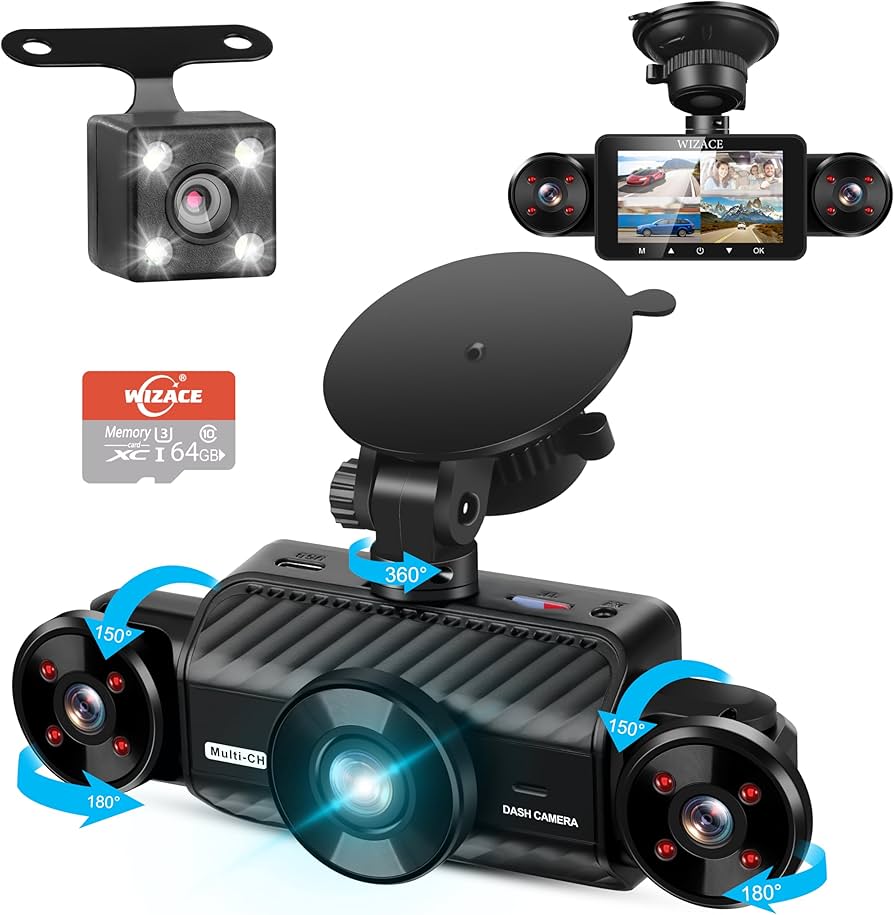
- High resolution recording
- Wide angle lens
- Night vision capability

As an Amazon Associate, we may earn from qualifying purchases.
Mid-tier contenders gaining ground
While the market leaders dominate headlines, several mid-tier companies are making significant strides in autonomous vehicle technology. These firms often focus on specific regional deployments or niche use cases, allowing them to refine their systems without the pressure of immediate global scale. Their progress is reshaping the competitive landscape by proving that safe, reliable autonomy is achievable outside of the most high-profile testbeds.
These emerging players are leveraging specialized sensor suites and targeted geofencing to achieve high levels of operational safety. By concentrating on dense urban environments or controlled highway corridors, they are accumulating valuable data that accelerates their development cycles. This focused approach allows them to iterate quickly and address edge cases that broader, less specialized systems might overlook.
The following comparison highlights key specifications of these mid-tier autonomous vehicles against top-tier competitors, illustrating the rapid convergence in capability.
| Company | Primary Focus | Current Status |
|---|---|---|
| Cruise | Urban Robotaxis | Limited Re-engagement |
| Waymo One | Full L4 Robotaxi | Expanding Cities |
| Motional | Hyundai/Kia Partnership | Pilot Programs |
The competition is no longer just about who can drive the longest distance, but who can do it most safely and cost-effectively. Mid-tier contenders are proving that specialized, regionally focused deployment strategies can yield robust results, challenging the dominance of early movers. As regulatory frameworks evolve, these companies are well-positioned to capture significant market share in specific geographic and operational niches.
Level 4 autonomy: What to expect
The difference between Level 3 and Level 4 autonomy is the difference between a passenger who must stay alert and a passenger who can actually sleep. Level 3 systems, like those found in the Honda Legend or Mercedes-Benz Drive Pilot, require the driver to take back control when the system reaches its limits. This handoff is the most dangerous moment in autonomous driving, as human reaction times are slow and often distracted.
Level 4 autonomy removes that requirement entirely. In a Level 4 vehicle, the system handles all aspects of driving within a specific operational design domain (ODD). If the system encounters a situation it cannot handle—such as severe weather or a construction zone—it will safely stop the vehicle without human intervention. This shift changes the car from a tool you operate to a service you use.
In 2026, Level 4 technology is primarily available in two forms: geofenced robotaxis and high-end personal vehicles. Waymo’s fully driverless service in Phoenix and San Francisco is the most prominent example of the former. For consumers, this means you are no longer buying a car; you are subscribing to a mobility service that operates without a human driver in approved zones.
The second form is personal vehicles equipped with Level 4 capabilities, such as the Audi A8 with its Traffic Jam Pilot. These cars allow for hands-free, eyes-off driving on highways but revert to Level 2 (driver supervision) in city streets. This hybrid approach is common because mapping detailed city streets for full autonomy is expensive and complex.
| Feature | Level 3 (Conditional) | Level 4 (High) |
|---|---|---|
| Driver Supervision | Required when system requests | Not required within ODD |
| Fallback Responsibility | Human driver | Automated System |
| Typical Use Case | Highway traffic jams | Geofenced robotaxis, highway cruising |
| Liability | Driver (usually) | Manufacturer/Operator |
For consumers considering a Level 4 vehicle, the most important factor is the operational design domain. You must understand exactly where the car can drive without you. If you live outside the mapped zones of a robotaxi service, you may find the technology frustratingly limited. However, for those in major metropolitan areas, Level 4 autonomy offers a tangible reduction in driving stress and accident risk.
Essential Driving Accessories
Even with advanced autonomous systems, having the right accessories can improve your experience. Whether you are a passenger in a Waymo or a driver using Level 2 features, comfort and safety gear remain important.


As an Amazon Associate, we may earn from qualifying purchases.
These items are small but significant. A good phone mount ensures your navigation is always visible, while a seat gap filler keeps your essentials within reach. These accessories complement the technology rather than replace it, making every drive more comfortable.
No comments yet. Be the first to share your thoughts!