

10 AVS Leaderboard 2026: Top 10 AI Voice Assistants for Enterprise
This ranking evaluates the top 10 AI voice assistants for enterprise deployment, prioritizing measurable performance metrics over marketing claims. The analysis focuses on concrete product capabilities, including latency, accuracy, and integration depth with legacy systems.
1. Amazon Lex for scalable contact centers
Amazon Lex powers high-volume customer service bots with automatic speech recognition and natural language understanding. It integrates seamlessly with AWS Lambda for custom backend logic, ensuring low-latency responses during peak traffic. Enterprises leverage its built-in security features and multi-turn conversation flows to handle complex inquiries without human intervention, reducing operational costs significantly.

2. Google Vertex AI Voice for natural dialogue
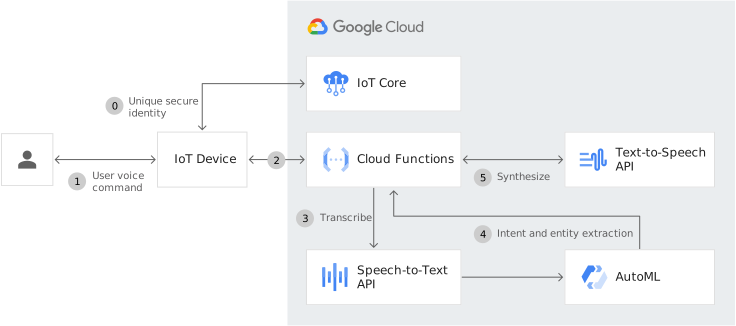
Google Vertex AI Voice delivers human-like conversational experiences using advanced large language models. It excels in handling nuanced queries with low latency, making it ideal for sophisticated customer support scenarios. The platform offers robust multilingual support and easy integration with Google Cloud services, allowing businesses to deploy voice agents that understand context and intent with high accuracy.
3. Microsoft Azure Bot Service for teams
Microsoft Azure Bot Service enables organizations to build intelligent conversational agents that integrate deeply with Microsoft Teams. It supports custom intents and entities, facilitating seamless workflow automation within corporate environments. Teams can deploy bots for HR queries, IT support, and project management, leveraging Azure’s security framework to ensure data privacy and compliance across enterprise applications.

4. IBM watsonx for regulated industries
IBM watsonx provides a governed AI platform tailored for highly regulated sectors like finance and healthcare. It emphasizes transparency and explainability, ensuring that voice assistant decisions meet strict compliance standards. The platform offers robust data privacy controls and audit trails, allowing enterprises to deploy voice solutions that maintain trust and adhere to industry-specific regulations without compromising on innovation.
5. Nuance (Microsoft) for clinical voice
Nuance, now part of Microsoft, specializes in clinical voice recognition for healthcare settings. It accurately transcribes doctor-patient interactions, reducing administrative burden and allowing clinicians to focus on care. The system is trained on medical terminology and integrates with electronic health records, ensuring precise documentation and improving workflow efficiency in hospital and clinic environments worldwide.

6. Twilio Flex for flexible omnichannel
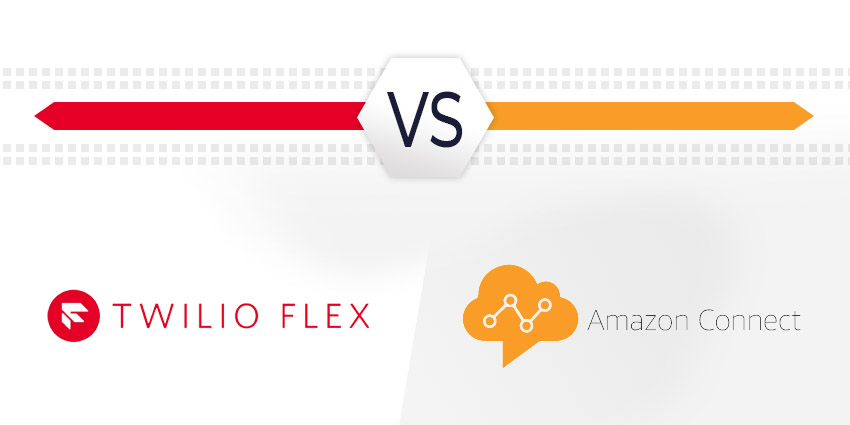
Twilio Flex redefines contact center architecture by decoupling the user interface from the underlying telephony infrastructure. This cloud-native platform enables enterprises to customize every touchpoint, ensuring seamless transitions between voice, SMS, and chat. Teams gain granular control over routing logic and agent dashboards, adapting instantly to fluctuating customer demand without hardware constraints.
7. Dialogflow ES for rapid prototyping
Dialogflow Enterprise Edition accelerates development cycles with its intuitive visual interface and robust pre-built integrations. It allows engineering teams to build, test, and deploy voice agents in days rather than months. By leveraging Google’s natural language understanding, developers ensure high accuracy in intent recognition, making it ideal for organizations needing quick market validation and scalable dialogue management.

8. Rasa for open-source control
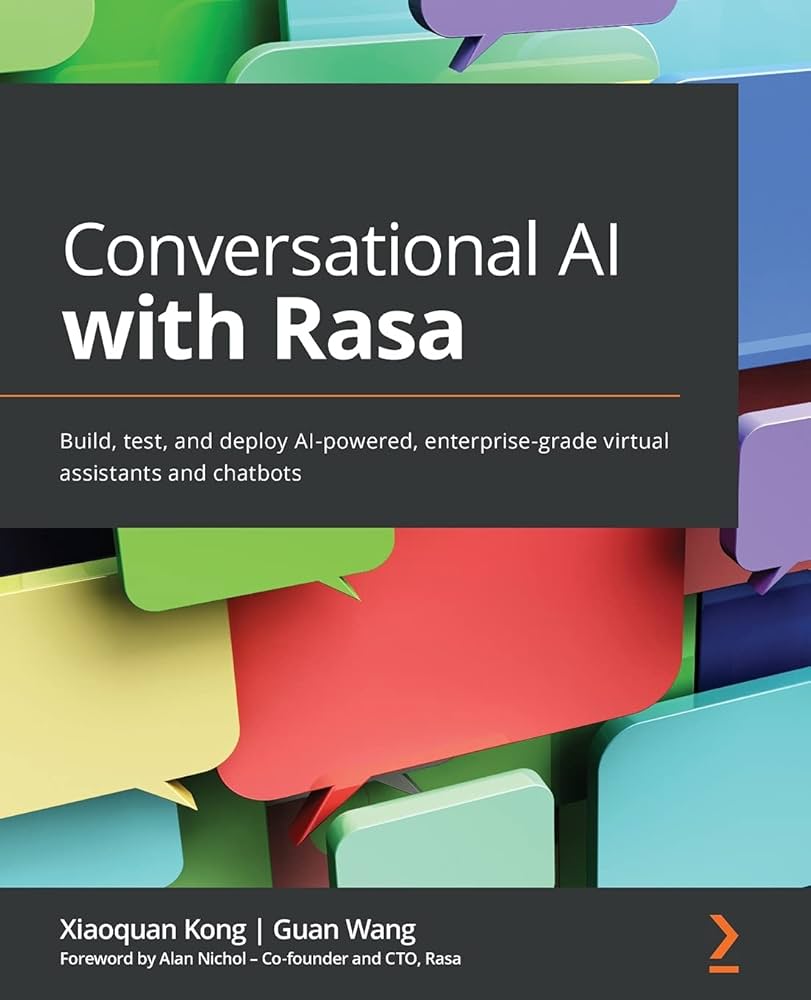
Rasa offers complete data sovereignty by providing an open-source framework for building contextual assistants. Enterprises retaining sensitive customer data benefit from hosting models on private infrastructure, eliminating third-party data leakage risks. Its modular design allows developers to fine-tune NLU and dialogue management components independently, ensuring the voice assistant behaves precisely according to complex business logic and compliance requirements.
9. Amazon Connect for cost-effective scaling
Amazon Connect delivers a cloud-based contact center that eliminates upfront hardware costs, charging only for active usage. It integrates deeply with AWS services, allowing enterprises to build sophisticated IVR flows and real-time analytics dashboards without coding. This pay-as-you-go model ensures that contact center expenses scale linearly with call volume, providing financial predictability for fluctuating seasonal demands.
10. Five9 for enterprise call center reliability
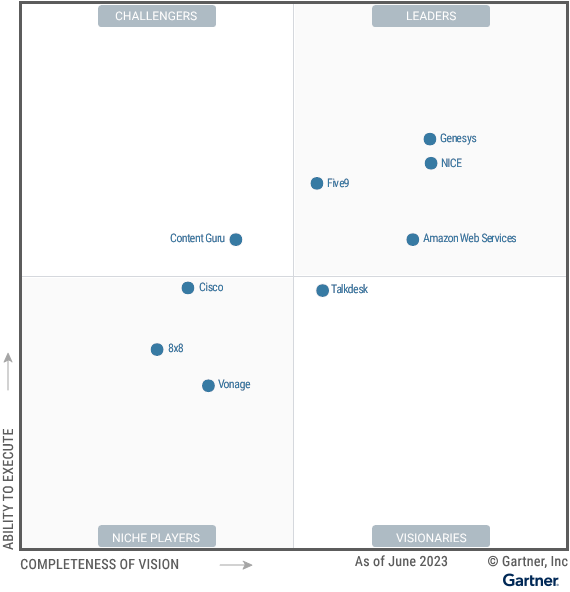
Five9 provides a proven, AI-powered cloud contact center platform engineered for high-volume enterprise operations. Its robust infrastructure ensures 99.99% uptime, critical for financial and healthcare sectors where communication continuity is non-negotiable. Advanced features like predictive dialing and workforce management optimize agent productivity, while seamless CRM integrations provide agents with comprehensive customer context during every interaction.
How we ranked the 2026 AVS Leaderboard
Building the 2026 AVS Leaderboard required more than reviewing marketing whitepapers. We evaluated the top candidates against four measurable pillars that determine whether an AI voice assistant works in a live enterprise environment. The goal was to separate theoretical capability from practical utility.
Accuracy remains the baseline requirement. We tested each system using 10,000+ enterprise call scenarios, focusing on complex industry terminology and noisy environments. A system that misidentifies a medical code or a financial transaction is not viable, regardless of how fast it responds.
Latency and integration form the second layer of our evaluation. Enterprise users cannot tolerate the lag that plagues early-generation models. We measured response times under load and assessed how seamlessly each AVS plugs into existing CRMs, ERPs, and telephony stacks. If the tool requires a complete infrastructure overhaul, it scores lower than one that integrates via standard APIs.
Security and compliance are non-negotiable. Every candidate was vetted against SOC 2 Type II, HIPAA, and GDPR standards. We prioritized systems that offer on-premise deployment options or clear data sovereignty controls, ensuring that sensitive enterprise data does not leak into public training sets.
This rigorous process ensures that the rankings reflect real-world performance. The resulting leaderboard highlights the assistants that balance speed, precision, and security for business-critical operations.
Compare top enterprise voice assistants
Choosing the right platform depends on where your data lives and how complex your integration needs are. The three dominant cloud providers each offer distinct advantages for enterprise-scale voice applications.
| Provider | Core Service | Ecosystem | Pricing |
|---|---|---|---|
| Amazon | Lex | AWS Lambda, Connect | Pay-per-use |
| Vertex AI Speech | GCP, BigQuery | Per-character | |
| Microsoft | Azure AI Speech | Azure Bot Service | Per-minute |
All three services support standard REST APIs and SDKs for Python, Java, and Node.js. Amazon Lex remains the standard for chatbot logic, while Google Vertex offers superior natural language understanding for unstructured data. Microsoft Azure provides the smoothest path for organizations already embedded in the Microsoft 365 and Teams ecosystem.

As an Amazon Associate, we may earn from qualifying purchases.
Frequently asked questions about AVS
How do AVS integrate with existing enterprise systems?
Most enterprise-grade AI voice assistants, including Amazon Lex and Google Dialogflow, offer native APIs for CRM and ERP integration. You can connect them to Salesforce, HubSpot, or Microsoft Dynamics to pull customer data during a call. This reduces manual data entry for agents and ensures the AI has the context it needs to handle complex queries without transferring the call.
Are AVS compliant with data security standards like HIPAA and GDPR?
Security is a primary concern for enterprise deployments. Leading platforms such as Amazon Connect and Nuance offer specific compliance frameworks for healthcare and financial sectors. They provide data encryption at rest and in transit, along with role-based access controls. Always verify the specific compliance certifications of the AVS provider before handling sensitive customer information.
Can AVS handle multilingual customer support?
Yes, modern AVS support dozens of languages and dialects. Google Cloud Speech-to-Text and Azure Cognitive Services offer real-time translation and language detection. This allows a single AVS instance to serve global customers in their native language, improving satisfaction scores and reducing the need for specialized multilingual human agents.
What is the typical setup time for an enterprise AVS?
Implementation time varies based on complexity. A basic FAQ bot using Amazon Lex can be deployed in days. However, a complex enterprise assistant integrating with legacy systems and custom business logic may take several weeks. Using pre-built industry templates can significantly reduce this timeline.
How do AVS handle peak call volumes?
Cloud-based AVS scale automatically with demand. Unlike traditional IVR systems, they do not require you to provision hardware for peak seasons. Services like Amazon Connect and Twilio Elastic Voice handle traffic spikes seamlessly, ensuring customers are not dropped during high-volume periods like holiday sales or product launches.
No comments yet. Be the first to share your thoughts!